LinkedIn Video Marketing: What Winning Brands Do Differently
Clear Owl
Blog
For brand managers and B2B marketers who want to stop blending in.
Why LinkedIn Video Has Changed the Game
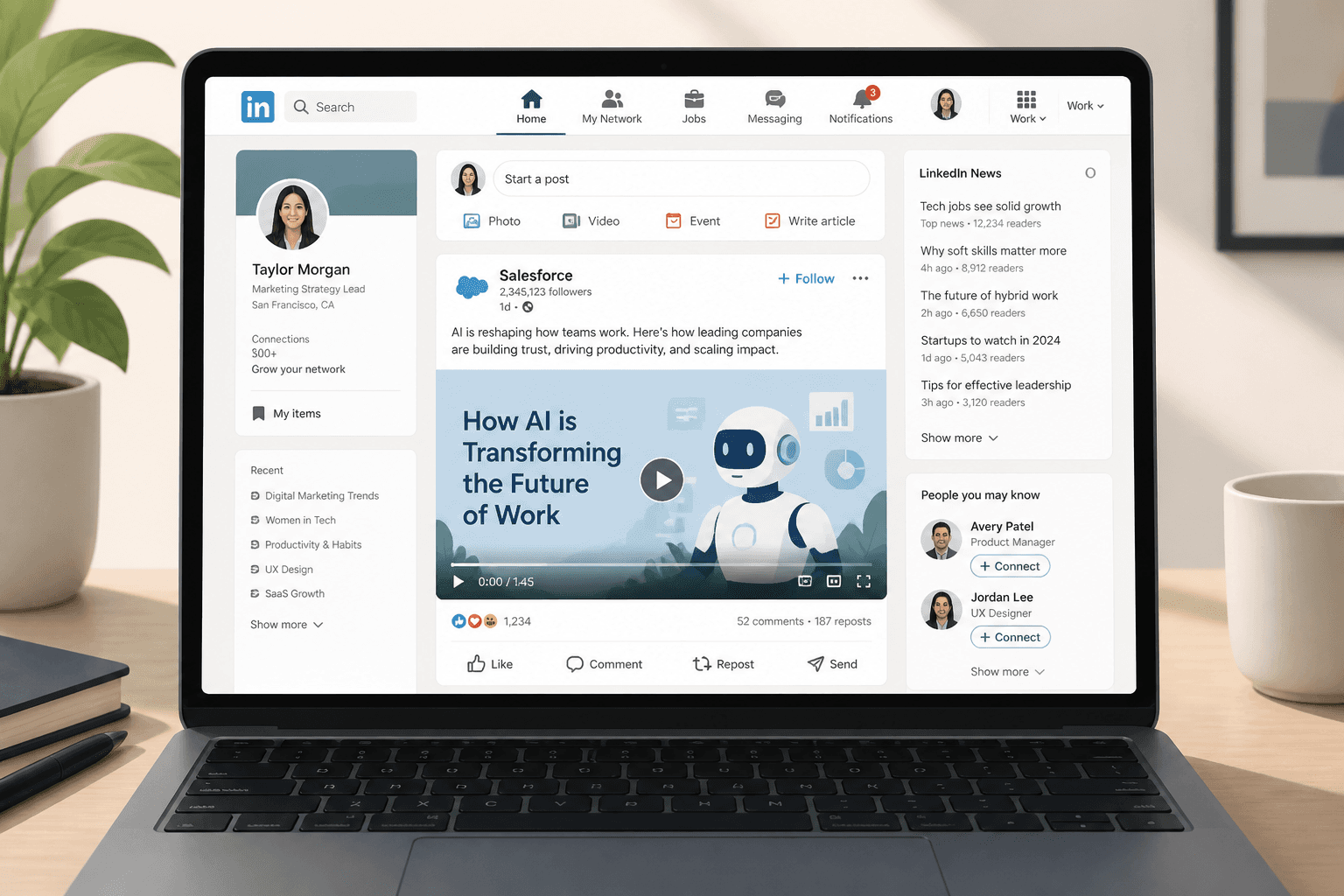
Something has shifted on your LinkedIn feed. The posts stopping your scroll aren't text updates anymore. They are videos. And the brands dominating your attention aren't there by accident — they've figured out how the platform actually works in 2026.
Video on LinkedIn isn't just another content format. It's the format the algorithm has learned to reward. Understanding why, and what to do about it, changes everything about how your brand shows up
Native Video vs External Links — Why One Gets 3x the Reach
Upload a video directly to LinkedIn and something different happens inside the platform. Native uploads stay within LinkedIn's ecosystem. The algorithm treats them differently, prioritising them in feeds, recommendations, and visibility over any external link you share.
The same video uploaded natively versus shared as a YouTube link can see up to three times the impressions. That gap has nothing to do with production quality or message. It's architectural. LinkedIn wants people scrolling its own content, not clicking away.
The takeaway: Always upload natively. Stop sharing YouTube links as your primary video post.
How the LinkedIn Algorithm Actually Rewards Video
The algorithm doesn't just prefer video — it measures how people respond to it. Comments, shares, watch time, and how long someone stays on your video all signal value. But only if people actually watch.
This is why posting native video is just the starting point. Brands that win go further. They design every video to earn that engagement, second by second.
Silent Viewing — The Strategy Most Brands Still Miss
Most LinkedIn videos are watched without sound. People scroll in offices, on commutes, in meetings. They are not hunting for audio.
Yet most brands still create videos that depend entirely on what is being said.
The smartest brands on LinkedIn design their videos for silence first. This means:
Subtitles on every video - not as an afterthought but as the primary visual layer
Text overlays that tell the story before anyone unmutes
A visual hook in the opening second — something moves, something changes, something appears that earns attention without sound
By the time a viewer unmutes, they are already invested. That captured viewer becomes an engaged viewer. The algorithm notices the difference immediately.
Video Length — What Actually Gets Watched vs Skipped
The old advice was simple: shorter is better. Thirty seconds. Forty-five seconds. That advice is outdated and incomplete.
What matters is not length. It's momentum.
A three-minute video that is paced well — where every moment builds on the last — will outperform a forty-five-second video that wastes the opening. The winning structure looks like this:
Second 1 — Visual or verbal hook
Second 5 — Clear point established
Middle — Demonstration or expansion, as long as needed
End — Clean, purposeful landing
Some of these videos run ninety seconds. Some run six minutes. Length serves the story, not the other way around.
The metric that matters most here is completion rate - how far people watch before they stop. If half your audience drops at the one-minute mark, the algorithm notices. If ninety percent watches to the end, it notices that too. Design for completion, not compression.
Thought Leadership vs Product Video — What Works for Brands
Brands make a common mistake. They default to product videos because they feel safe and measurable. But on LinkedIn, thought leadership video consistently outperforms promotional content.
Why? Because LinkedIn's audience is there to learn and grow professionally, not to be sold to. The brands seeing the highest engagement are posting videos that:
Tackle a real problem their audience faces daily
Share a genuine point of view — not a safe, polished corporate message
Feature real people, not just brand graphics and voiceovers
Product videos have a place, but they work best as retargeting content, not as your primary organic strategy.
The Specificity Advantage — Who Are You Actually Talking To
The brands dominating LinkedIn video are not making content for "business professionals." They are making videos for operations managers struggling with team coordination. For executives tired of update meetings. For individual contributors trying to move up.
This specificity changes everything - how you frame the problem, how you open the video, what language you use. Specific content feels personally relevant. Broadly applicable content gets scrolled past.
Before you brief your next video, answer this one question: who exactly is this for, and what is the one thing they are dealing with right now?
How to Measure LinkedIn Video Beyond View Count?
Views are vanity. The metrics that actually tell you if your video strategy is working:
Watch time and completion rate — are people finishing your videos?
Engagement rate — comments and shares over impressions
Profile visits after viewing — are videos driving curiosity about your brand?
Follower growth tied to video posts — are the right people finding you?
Inbound messages or leads — the ultimate B2B signal
If your view count is high but comments are low and profile visits are flat, your content is being seen but not landing. Adjust the hook, the specificity, or the format.
What Separates Winning Brands From Everyone Else
It is not budget. It is not production quality. It is not even posting frequency.
It is understanding that every second of a LinkedIn video needs to justify itself. It is designing for how people actually consume content — silently, quickly, on mobile — not how they theoretically should. And it is recognising that the algorithm is not your enemy. It is showing you exactly what works, if you are willing to read the signal.
The brands winning on LinkedIn video understood this shift early. The window to catch up is still open, but it is closing.