
What is a Design System and Does Your Business Actually Need One?
Clear Owl
Blog
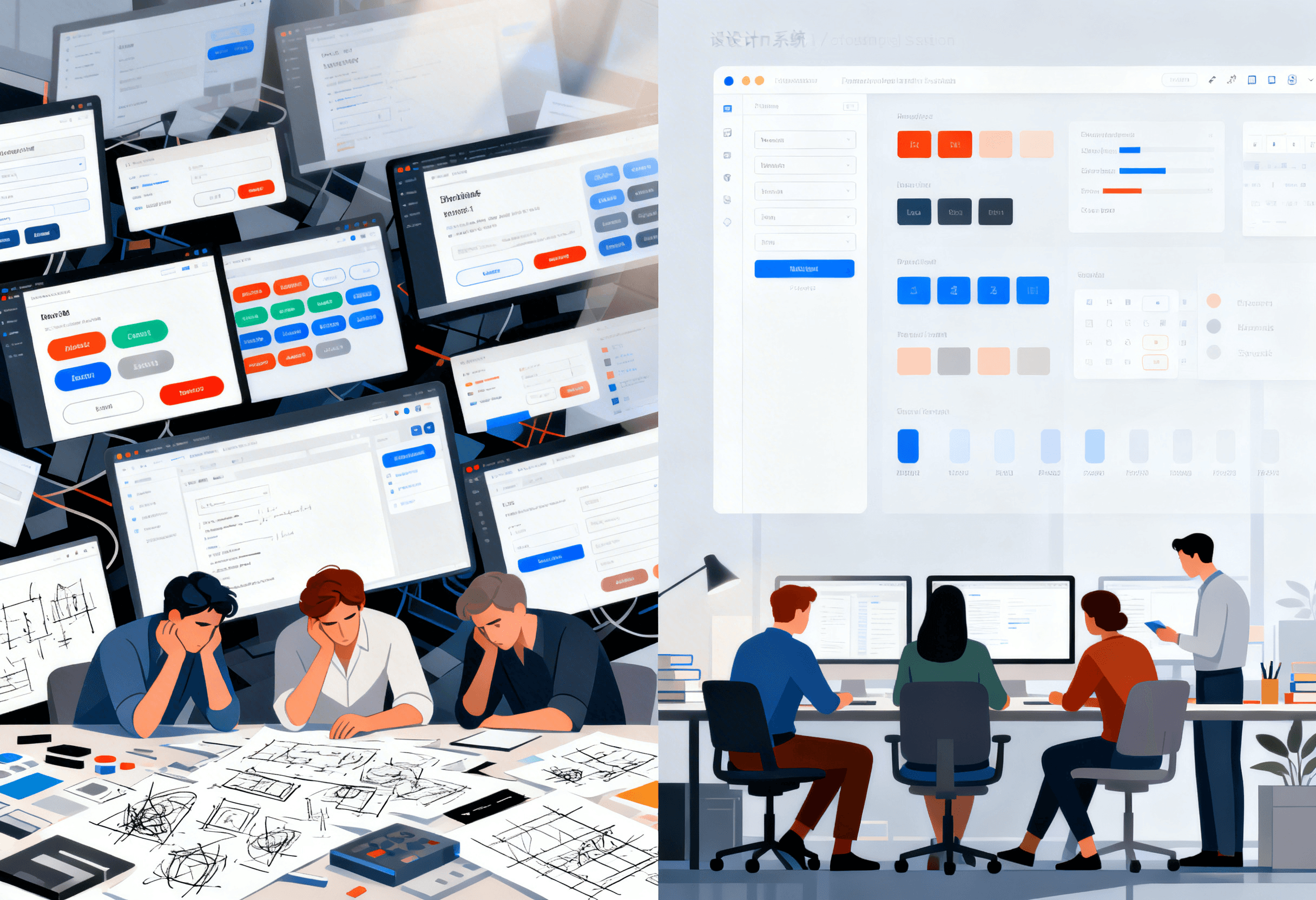
Picture this: Maya's product team just finished their third redesign of the user dashboard in six months. Across the company, the support team is using an entirely different button style. The marketing website? That uses a completely different colour palette altogether.
This isn't chaos born from incompetence. This is what happens when talented people build independently, without a shared reference point. It costs time, money, and quietly erodes the one thing that's hardest to rebuild: customer trust.
The solution? A design language. Or as the industry likes to call it — a design system.
So, What Are We Actually Talking About
A design system for business isn't a luxury add-on for massive tech companies. It's a living, breathing reference guide that captures how your organization creates digital experiences consistently, intentionally, and without Maya’s team having to reinvent the button for the fourth time.
It includes:
UI components you reuse across products (so no one's rebuilding the wheel at 11 pm)
Design tokens that define colours, spacing, and typography
Brand consistency guidelines that ensure everything feels cohesive and unified
Think of it this way: if your brand were a person, your style guide would be their personality manual. It explains how they speak, dress, make decisions, and show up in the world. Your component library is the wardrobe they reach for every morning. Design guidelines are the values that guide their choices. Put it all together, and you have a brand identity system: the complete, considered picture of who you are.
The Real Business Case
Industry experts indicate that organisations without cohesive design standards face real friction. Teams rebuild solutions instead of reusing them. Designers spend time on decisions that were already made last quarter. Developers implement the same interaction pattern four different ways. And customers? They experience an inconsistency that they can't always name, but absolutely feel.
A proper design system for business solves this by creating a single source of truth. When your brand consistency guidelines are clear, onboarding new designers takes weeks instead of months. When your component library exists, product teams launch faster. When your design tokens are defined, changing a colour across your entire ecosystem takes minutes, not months.
The efficiency gains are measurable. More importantly, the customer experience improves. Consistency breeds familiarity. Familiarity builds trust. And trust, as it turns out, is what makes people come back.
Does Your Business Actually Need One?
Here's the honest answer: it depends on where you are.
If you're a solopreneur building your first product, a formal design system for business might be jumping the gun. You're the designer, marketer, and product person—consistency happens naturally because it's all in your head.
But the moment you add a second designer? A second product? A separate marketing team? You've entered the territory where a design language becomes essential. You're not obsessing over pixels — you're making a smart infrastructure decision.
Scalable design needs foundations. Your brand identity system becomes the infrastructure that lets your organisation grow without becoming fragmented. Design guidelines prevent talented people from working at cross-purposes. Your UI components let teams move faster as you expand.
Starting Without Losing Your Mind
Here's the good news: you don't need to build a perfect, encyclopaedic design system on day one. Nobody does.
Start with what matters most: core UI components, design tokens for colour and typography, and brand guidelines for your most-used patterns.
Document as you build. Create design guidelines that reflect how decisions should be made, not just what the current decisions are. Make your component library accessible to everyone who needs it.
Then iterate. Real design systems evolve because products and teams evolve. What matters is creating a practice of intentionality around your design language.
Your customers will never open your brand identity system. They won't read your component library or admire your design tokens. But they will feel the difference between a product built thoughtfully and one assembled reactively.
A design system for business isn't about perfection—it's about respect. Respect for your customers' time, your team's energy, and your business's potential to scale without the chaos Maya’s team has been dealing with for the past six months.