Human + AI is the New Job Title: The rise of the AI-augmented professional across roles
Clear Owl
Blog
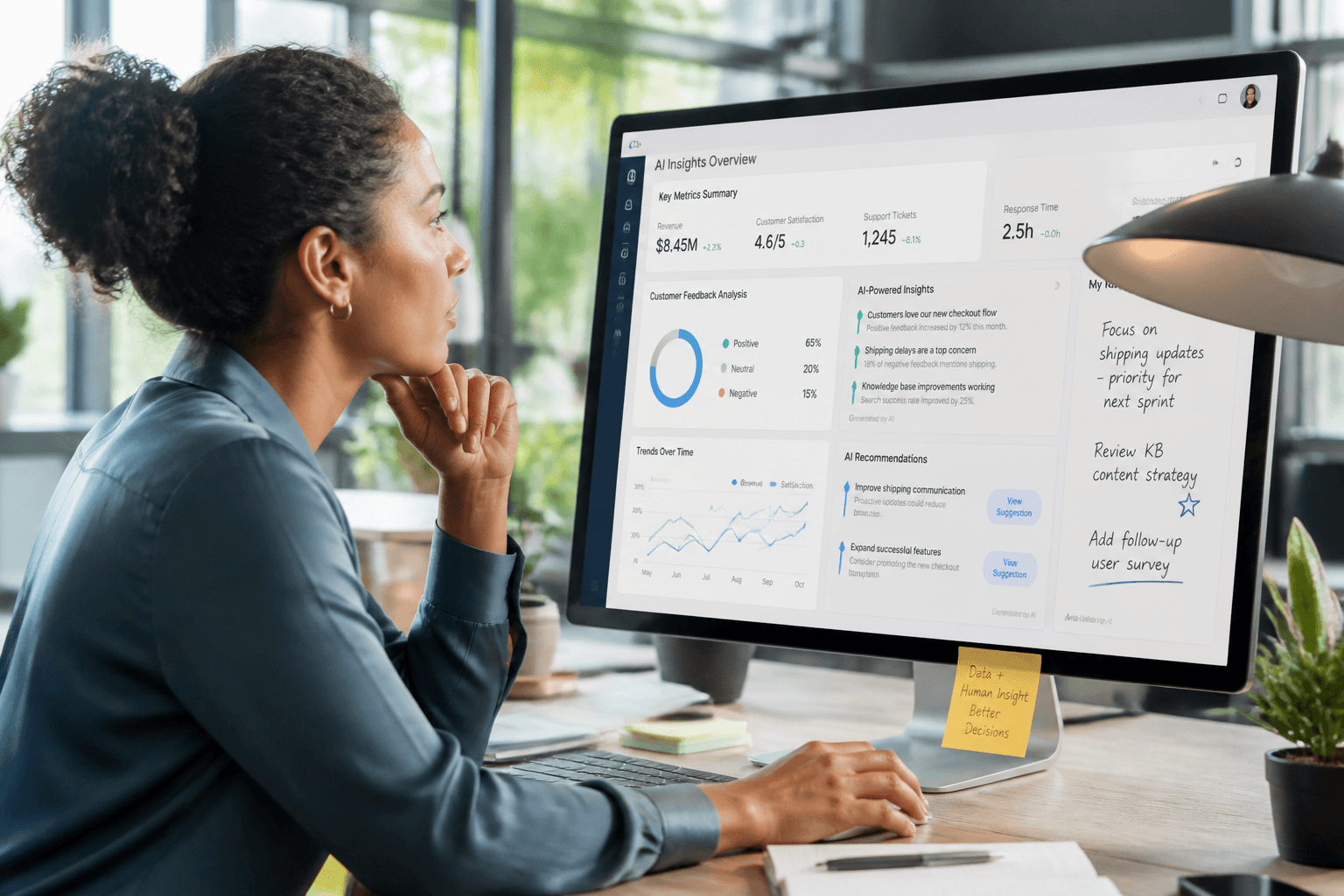
Sarah sits at her desk in Toronto, staring at her inbox. Two years ago, she would've spent hours manually sorting through customer feedback, categorising complaints, and flagging priority issues. Today, she reviews summaries an AI system has prepared, but she's the one deciding which insights matter most. She's not being replaced by automation. She's becoming something new: an AI-augmented professional.
This isn't a future scenario. This is happening now, across industries and continents. The job market is transforming. The question isn't whether AI will change work, it's how professionals will evolve alongside it.
The Shift Nobody Saw Coming (But Should Have)
For decades, the narrative around automation was binary: machines replace humans, or they don't. That framing missed something crucial: humans and machines are better together than apart.
AI workflow automation has revealed this truth across every sector. Radiologists now use AI to flag potential issues in medical scans, freeing them to focus on complex diagnoses. Accountants leverage automated systems to handle routine reconciliations, spending their time on strategic financial planning. Content creators use writing tools to handle initial drafts, then invest their creative energy in storytelling and brand voice.
These professionals aren't doing less work. They're doing different work—work that requires human judgment, emotional intelligence, and strategic thinking.
What Makes This Different
The future of work isn't about replacing job titles. It's about expanding them. A marketing manager becomes a marketing manager who orchestrates both human creativity and algorithmic insights. A customer service representative becomes a representative who handles complex emotional situations while AI handles routine inquiries.
This shift demands something new from both employers and professionals: a willingness to view skills differently. Skills-based hiring frameworks are emerging precisely because traditional job descriptions no longer capture what people actually do. Companies aren't looking for people who can do one thing perfectly. They're looking for people who can collaborate effectively with AI, adapt when tools change, and understand when to trust automation versus human instinct.
The Skills That Matter Now
What separates the professionals thriving in this environment from those struggling?
Judgment over information. AI can surface insights. Humans decide what those insights mean for strategy, culture, and relationships.
Complementary thinking. The best AI-augmented professionals aren't trying to compete with machines. They are thinking about what machines do poorly (nuance, context, ethical reasoning) and leaning into those strengths.
Continuous learning. When tools change every few months, your willingness to experiment beats your current expertise. Curiosity becomes a core professional skill.
Cross-functional fluency. Human AI collaboration happens across teams now. A product manager needs to understand how data scientists think. A designer needs to grasp what AI can and can't accomplish. The silos are disappearing.
The Opportunity in Front of You
Organizations that recognize this shift early gain an enormous advantage. Teams that treat human AI collaboration as a design principle and not an afterthought attract better talent and ship better work.
For professionals, the invitation is clear: This isn't a threat to manage. It's a skill expansion to embrace. The people writing the future of their industries aren't the ones panicking about AI. They're the ones figuring out what they do that AI can't, and doing more of that.
Your job title might stay the same. Your actual work—what you spend your time on, what you're valued for, how you contribute—will evolve. That evolution is where the real opportunity lives.